
Welcome to My Web Page!

Welcome to my webpage!  I am a philosopher and political theorist.  My official academic title is the Sir Edward Peacock Professor of Political Theory in the Department of Political Studies at Queen’s University.  I am also cross-appointed with the Department of Philosophy and I occasionally  teach in the School of Policy Studies.

=======>   finger point**  Click here for my research on aging and geroscience  ***


A sample from my recent commentary in the Royal Society’s Biology Letters, a video presentation for their “Ecology and Evolution” seminar series

 
finger pointClick here for info on my latest book on the history of political thought

Lewis quote

I received all of my formal University education (e.g. BA, MA and PhD) in Philosophy, have been teaching in political science departments the past 24 years, and regularly publish my research in journals in science and medicine.   This unconventional career trajectory is a reflection of my somewhat bohemian intellectual interests and penchant for intellectual risk-taking.

JAGS COMMENTARY VIDEO ABSTRACT

My research interests are interdisciplinary and integrate insights from normative theory (e.g. political theory and bioethics) with empirical insights from a variety of scientific disciplines, such as evolutionary biology, genetics, medicine, demography, psychology, and biogerontology/geroscience.  The integration of these often distinct domains of “facts” and “norms” is what excites my intellectual curiosity the most.  This typically takes me off the beaten track of the topics traditionally examined by political theorists, but I believe science and science policy constitute the most significant areas of knowledge and public policy in the 21st century.  So it is an exciting time for political theorists and philosophers to explore these topics.  It is also imperative that students in the social sciences and humanities develop some level of scientific-literacy and critical thinking if we hope to meet the pressing societal challenges of the 21st century.  There are significant cultural and psychological factors that impede the development and refinement of these “epistemic virtues”.  To inspire my students to take seriously the development of their own intellect I try my best to emulate the epistemic virtues of curiosity, attention to the facts, intellectual humility, and adaptive thinking in both my teaching and research.

The foundational aspiration of my research is the advancement of the Enlightenment Project into the 21st century.  The themes of reason, science, progress, and optimism inform my curiosity-driven research interests and interdisciplinary focus. By embracing the critical thinking inherent in the Socratic method, I (cautiously and tentatively) aspire to help generate emancipatory knowledge that goes beyond what arm-chair normative theorizing typically has to offer.  In particular most of my research aspires to abate the presumptions of “folkbiology” (in debates concerning public health, science, medicine and political theory and bioethics) and examine the societal implications of advances in the biomedical sciences.

My intellect is oriented towards problem-solving (vs abstract puzzle-solving), and this influences both what I address in my research and how I do ethics and political philosophy.  My background training in philosophy has taught me that it is much more important to ask the right questions vs trying to answer the wrong questions, and this applies to all fields of inquiry, from science and medicine, to ethics and political theory.  I think it is both an exciting and important, but also a challenging and difficult, time to be working on these issues.  For the past 20+ years most of my research has focused on the ethical and social implications of advances in the biomedical sciences, especially human genetics and “geroscience”.  The latter aspires to increase the human healthspan by altering the rate of biological aging.

This site contains information about my academic career and research interests.

My CV is available here.   PubMed entries here.

TedX Queen’s Talk on Global Aging and Longevity Science:

CFRC interview:  

Central question which  preoccupies most of my research and life:   How should we live?

My past and current research focuses on more specific topics that arise from this general question, including:

  1. Global aging and its ethical and societal implications. 
  2. The “playful society” as a realistic utopia.
  3. What is political theory? And why is it important for us to do political theory?
  4. Pandemic justice and non-ideal theory
  5. What are the “epistemic virtues”? And how can virtue epistemology help us improve our understanding of the moral/political landscape?

If you are looking for my blog “In Search of Enlightenment” please click here.

Bio

colin Istanbul 2023

(Istanbul 2023)

I am a political theorist and philosopher and received my PhD from the University of Bristol in England in 1999.

I have published 6 books (two edited volumes and four single-authored books) and numerous articles in a variety of different journals.  My research interests are interdisciplinary and include normative issues in politics, philosophy, law, science and medicine.  My publications have appeared in journals such as Journal of the Royal Society of MedicinePolitical StudiesBritish Medical Journal, Journals of Gerontology, QJM: An International Journal of Medicine, Biogerontology, Annals of the New York Academy of Sciences, American Journal of BioethicsCanadian Journal of Political ScienceNature’s EMBO ReportsUniversity of Toronto Law JournalBioethicsPublic Health Ethics, Hypatia, Political Studies Review, Journal of Medical Licensure and Discipline, Rejuvenation Research and Philosophy of the Social Science.

Before coming to Queen’s University in 2008 I was Associate Professor of Political Science (Cross-Appointed with Philosophy) at Waterloo University for 5 years.  I also spent a year as a Research Fellow in the Dept of Politics and International Relations at Oxford University and as a Visitor in Oxford’s Program on the Ethics of the New Biosciences, and a semester as Visiting Professor at UCLA’s Dept. of Public Policy.  For the Fall term of 2018 I am the Fulbright Visiting Research Chair in the Social Sciences at the University of Hawaiʻi at Mānoa.

In the more distant past, I held full-time academic appointments in the Dept of Government at Manchester University, the Dept of Political Science and International Studies at Birmingham University and the Dept of Philosophy at the University of Aberdeen in Scotland.
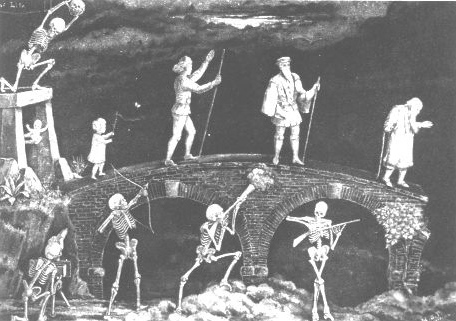
The bridge of life: frontispiece to Pearson (1897).

Posted in Uncategorized | Leave a comment

Publications

book covers

Books

(1) Classics of Political Thought for Today (Hackett Publishing, 2024)

(2) Genetics Ethics:  An Introduction  (Cambridge: Polity Press, 2018)

(3) Biologically Modified Justice (Cambridge: Cambridge University Press, 2016)

(4)  An Introduction to Contemporary Political Theory (London: Sage Publications, 2004).

(5)  Contemporary Political Theory: A Reader (London: Sage Publications, 2004).

(6)  Justice, Democracy and Reasonable Agreement (Basingstoke: Palgrave MacMillan, 2007)

(7)  Virtue Jurisprudence (co-edited with Lawrence Solum) (Basingstoke: Palgrave MacMillan, 2008 )

Publications (by discipline)     PubMed entries for “Colin Farrelly”

journal cover images 2

SCIENCE

● “The Geroscience Perspective on One HealthBioScience  (2025):biaf080

● “Wisdom-Inquiry Science is Essential for Healthy AgingAge and Ageing (2025) 28;54(4):afaf073.

● “Climate Geroscience: The Case for “Wisdom-Inquiry” ScienceBiology Letters  (2024 ) 20:20240426,

The Role of Science Communication in Advancing Translational Gerontology Journal of the American Geriatrics Society 2024 Dec;72(12):3931-3935.

●“Imagination and Idealism after the COVID-19 Pandemic: The Science of Healthy AgingRoyal Society Open Science 2024 Jan 31;11(1):231102. doi: 10.1098/rsos.231102.

●“Geroscience and Climate Science:  Oppositional or Complimentary?Aging Cell Aug;22(8):e13890. doi: 10.1111/acel.13890. 

●”Geroscience and Public Health’s Plastic “Ecology of Ideas”” in Journals of Gerontology: Biological Sciences May 11;78(5):793-797. doi: 10.1093/gerona/glad065.

●”Longevity Science and Women’s Health and Wellbeing” Journal of Population Ageing (2023) early online access.

● ”50 Years of the War on Cancer: Lessons for Public Health and Geroscience” Geroscience. 2021 Jun;43(3):1229-1235 (access online for free).  

● “Responsible Biology, Aging Populations and the 50th Anniversary of the “War on Cancer””  Biogerontology  2021 Aug;22(4):429-440.

“COVID-19, Biogerontology and the Ageing of Humanity”  Journals of Gerontology: Biological Sciences 2021, 76(8), e92–e96. (access) 

●“Aging, Geroscience and Freedom” Rejuvenation Research 22(2) 2019: 163-170.

● “Biogerontology and the Intellectual Virtues”  Journal of Gerontology: Biological Sciences   67(7), 2012. pp. 734-6.

● “”Positive Biology” as a New Paradigm for the Medical Sciences” Nature’s EMBO Reports 13, 2012, pp. 186 – 188

●  “Global Aging, Well-Ordered Science and Prospection” Rejuvenation Research 13(5) (2010):607-12.

● “Framing the Inborn Aging Process and Longevity Science” Biogerontology 11(3) (2010): 377-85.

●  “Why Aging Research?”Annals of the New York Academy of Sciences 1197 (2010): 1–8.

●  “A Tale of Two Strategies:  The Moral Imperative to Tackle Ageing” Nature’s EMBO Reports, Vol. 9(7), 2008, pp. 592-95. [PDF available for free via PubMed]

● “Sufficiency, Justice and the Pursuit of Health- Extension” Rejuvenation Research Vol. 10(4), 2007, pp. 513-20.

● “Genes and Distributive Justice” Nature Encyclopedia of the Human Genome 2003.

POLITICAL SCIENCE

● “How Should we Theorize About Justice in the Genomic Era?” in Politics and the Life Sciences 2021 40(1): 106-125.  

●“Toleration, “Mindsight” and the Epistemic Virtues” in The Palgrave Handbook on Toleration (2021).

● “The “Focusing Illusion” of Rawlsian Ideal Theory” in John Rawls: Debating the Major Questions (edited by Sarah Roberts-Cady and Jon Mandle) with Oxford University Press, 2020.

● “Virtue Epistemology and the Democratic Life” in The Oxford Handbook to Virtue (edited by Cynthia Snow) (Oxford: Oxford University Press, 2017).

●”Play and Politics” Journal of Political Science Education Vol 9(4) 2013, pp. 487-500.

●“Virtue Epistemology and the “Epistemic Fitness” of Democracy” Political Studies Review  10(1), 2012, pp. 7-22.

●“Justice in Ideal Theory: A Refutation”  Political Studies Volume 55, 2007, pp. 844–864.

● “Dualism, Incentives and the Demands of Rawlsian Justice” Canadian Journal of Political Science, Vol. 38(3), Sept. 2005, pp. 675-95.

● “Making Deliberative Democracy a More Practical Political Ideal” European Journal of Political Theory, Vol. 4(2), 2005, pp. 200-208.

● “Taxation and Distributive Justice” Political Studies Review, Vol. 2, 2004, pp. 185-197.

● “Incentives and the Natural Duties of Justice”, Politics, Vol. 20(1), 2000, pp. 19-24.

● “Does Rawls Support the Procedural Republic?” Politics, Vol. 19, No. 1, February 1999, pp. 29-35.

● “Neutrality, Toleration and Reasonable Agreement” in D. Castiglioni and C. Mackinnon, eds.,Toleration, Neutrality and Democracy (Amsterdam: Kluwer, 2003).

● “Deliberative Democracy and Nanotechnology” Nanoethics: Examining the Societal Impact of Nanotechnology (NJ:  John Wiley and Sons Inc.) edited by Fritz Allhoff, Patrick Lin, James Moor and John Weckert.

MEDICINE

● “Aging, Equality and the Human Healthspan.” HEC forum : an interdisciplinary journal on hospitals’ ethical and legal issues, 1–19. 8 Nov. 2022, doi:10.1007/s10730-022-09499-3

● Tyler J. Vander Weele, Claudia Trudel-Fitzgerald, Paul Allin, Colin Farrelly et al. “Current Recommendations on the Selection of Measures for Well-being” Preventive Medicine Vol 133, April 2020. [access online for free] Tyler J. Vander Weele, Claudia

● Trudel-Fitzgerald, Paul Allin, Colin Farrelly et al. “Brief Well-being Assessments, or Nothing at All? Preventive Medicine Vol 135, June 2020.

● “Why the NIH Should Create an Institute of Positive Biology” Journal of the Royal Society of Medicine Vol. 115(12) (2012): 412-15.

● “Towards a More Inclusive Vision of the Medical Sciences” QJM: An International Journal of Medicine 102 (2009): 579-582.

● “Has the Time Come to Take on Time Itself?” British Medical Journal, Vol. 337, 2008, pp. 147-48.

● “Preparing for Our Enhanced Future” Journal of Medical Licensure and Discipline Vol 93(2), 2007, pp. 12-18.

BIOETHICS

●  “Imagination and Idealism in the Medical Sciences of an Aging World”  Journal of Medical Ethics 2022.

●“Justice and Life Extension” in End-of-Life Ethics (edited by John Davis) (New York, NY: Routledge Publishing, 2016).

● Colin Farrelly, “Gene Patents and the Social Justice Lens” (commentary) American Journal of Bioethics 8(12) (2018) 49-51.

● “Normative Theorising about Genetics” (forthcoming) Cambridge Quarterly of Healthcare Ethics,  22(4) (2013): 408-419.

● “Equality and the Duty to Retard Human Aging” Bioethics 24(8) (2010): 384-94.

● “Preimplantation Genetic Diagnosis, Reproductive Freedom, and Deliberative Democracy” Journal of Medicine and Philosophy 34(2) (2009):135-154.

● “Aging Research, Priorities and Aggregation” Public Health Ethics , Vol. 1(3), 2008, pp. 258-67.

● “3 Wishes” Journal of Evolution and Technology, Vol. 20(1), 2008, pp. 23-28.

●  “The Case for Re-thinking Incest Laws” Journal of Medical Ethics Vol. 34:e2, 2008, pp. 1-2.

●“Genetic Justice Must Track Genetic Complexity” Cambridge Quarterly of Healthcare Ethics, Vol. 17(1), 2008, pp. 45-53.

● “Virtue Ethics and Prenatal Genetic Enhancement” Studies in Ethics, Law, and Technology Vol. 1(1), 2007, pp. 1-13.

● “Justice in the Genetically Transformed Society” Kennedy Institute of Ethics Journal, Vol. 15(1), 2005, pp. 91-99.

● “Genes and Equality” Journal of Medical Ethics, Vol. 30(4), 2004, pp. 587-592.

● “The Genetic Difference Principle” American Journal of Bioethics, Vol. 4(2), 2004, W21-28.

● “Genes and Social Justice:  A Rawlsian Response to Moore” Bioethics Vol. 16(1), 2002, 72-83.

PHILOSOPHY

● “Framing Longevity Science and an “Aging Enhancement”” in The Routledge Handbook of the Ethics of Human Enhancement (edited by Fabrice Jotterand, Marcello Ienca) (Routledge: 2023).

●““Positive Biology” and Well-Ordered Science” in Measuring Well-Being: Interdisciplinary Perspectives from the Social Sciences and the Humanities (edited by Matthew Lee, Laura Kubzansky, and Tyler VanderWeele) (Oxford University Press, 2021).

●“Insulating Soldiers from the Emotional Costs of War: An Ethical Analysis” forthcoming in Transhumanizing War: Performance Enhancement and the Implications for Policy, the Soldier, and Society (eds. C. Breede, S. von Hlatky and S. Bélanger) (McGill-Queen’s University Press, 2019).

● “Empirical Ethics and the Duty to Extend the Biological Warranty Period” Social Philosophy and Policy 30 (2013): 480-503.

● “Patriarchy and Historical Materialism” Hypatia 26(1), 2011, pp. pages 1–21

●“Mind the Gap: Beneficence and Senescence” Public Affairs Quarterly Vol. 24(2), 2010, pp. 115-130.

● “Gene Patents and Justice” Journal of Value Inquiry Vol. 41 (2-4), 2007, pp. 147-163.

● “Historical Materialism and Supervenience” Philosophy of the Social Sciences, Vol. 35(4), 2005, pp. 420-446.

● “A Challenge to Brink’s Metaphysical Egoism” Res Publica: A Journal of Legal and Social Philosophy, Vol. 9, No. 3, 2003, pp. 243-256.

● “Genetic Intervention and the New Frontiers of Justice” Canadian Philosophical Review XLI, 2002, pp. 139-154.

● “Justice and a Citizens’ Basic Income”, Journal of Applied Philosophy 16(3), 1999, pp. 283-296.

LAW

●  “The Institutional Theory of Legal Interpretation” University of Toronto Law Journal, Vol. 58(2), 2008, pp. 217-32.

● “Civic Liberalism and the ‘Dialogical Model’ of Judicial Review” Law and Philosophy Vol. 25(5), 2006, pp. 489-532.  Reprinted in edited volume Virtue Jurisprudence.

● “The Social Character of Freedom of Expression” Canadian Journal of Law and Jurisprudence 14(2), 2001, pp. 261-71.

● “Public Reason, Neutrality and Civic Virtue” Ratio Juris: An International Journal of Jurisprudence and Philosophy of Law, 12(1), 1999, pp. 11-25.


Posted in Uncategorized | Leave a comment

Research Statement

Research Statement

My intellectual outlook and research interests are oriented towards both the past and future of humanity. 

The epistemic “prime directive” that underpins my research/teaching is the question:  “How should we live?” 

Trying to answer this question requires one to tackle a host of other, more specific, questions.  I try my best to approach these questions and topics with both curiosity and intellectual humility.  This means I draw upon insights from a diverse range of traditions and disciplines as I slowly work towards the goal of generating emancipatory knowledge.  And I believe the lessons one learns on this intellectual journey this is the real reward, worth much more than any provisional, substantive conclusions one could reach in terms of answering this question.   

Posted in Uncategorized | Leave a comment

MULTIMEDIA

lecture
seminar presentation of Opinion piece in Royal Society’s Biology Letters (2024)
Video abstract of recent article in Aging Cell (2023)
Video presentation of some reflections on my forthcoming paper in the Journal of Population Ageing.
Trailer video for my course “Science and Justice” made during the Omicron lockdown in winter 2022
Video presentation of Essay in Oct. 2012 issue of the Journal of the Royal Society of Medicine:
Online video lecture for POLS 250 titled “Why learn anything?”.  The video aspires to help motivate my students to engage with the history of political thought.
Paper presented at the Social Philosophy and Policy Conference in Tucson, Arizona (Jan. 2013)
Video presentations on aging and longevity science (1st video is short, 2nd video is long):
Video presentation of “Patriarchy and Historical Materialism”:
Play and Politics video:
“3 Wishes” Video (my personal favourite):
Presentation of Ottawa talk on the humanities and natural sciences (May 2013)
Places I have lived:

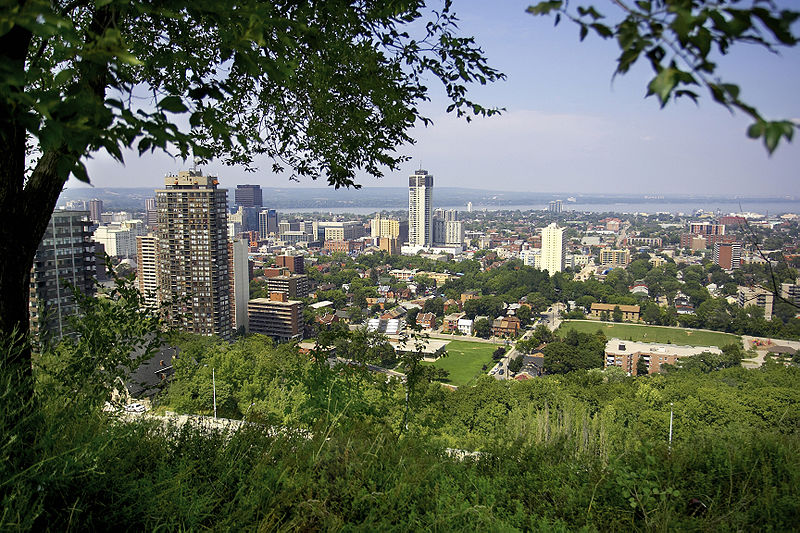
hamilton

Hamilton, Ontario (where I grew up)

bristol-21

Bristol, England

aberdeen2

Aberdeen, Scotland

birmingham1

Birmingham, England

manchester21

Manchester, England

(I worked in Manchester but actually lived in a small town nearby called “Cheadle”).

waterloo1

Waterloo, Ontario

oxford1

Oxford, England

image

Los Angeles, CA

Manoa Hawaii

bilkent campus sunriseAnkara, Türkiye

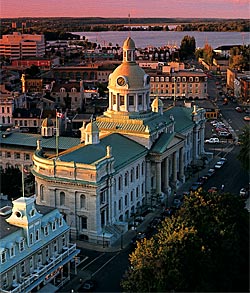
kingston1

Kingston, Ontario

Continue reading

Posted in Uncategorized | Leave a comment